
Chapter 6
Just Play
Before we build sentences, correct patterns, or practice speaking, we start with something simpler, lighter, and surprisingly effective: play.
Why Play Works for the Brain
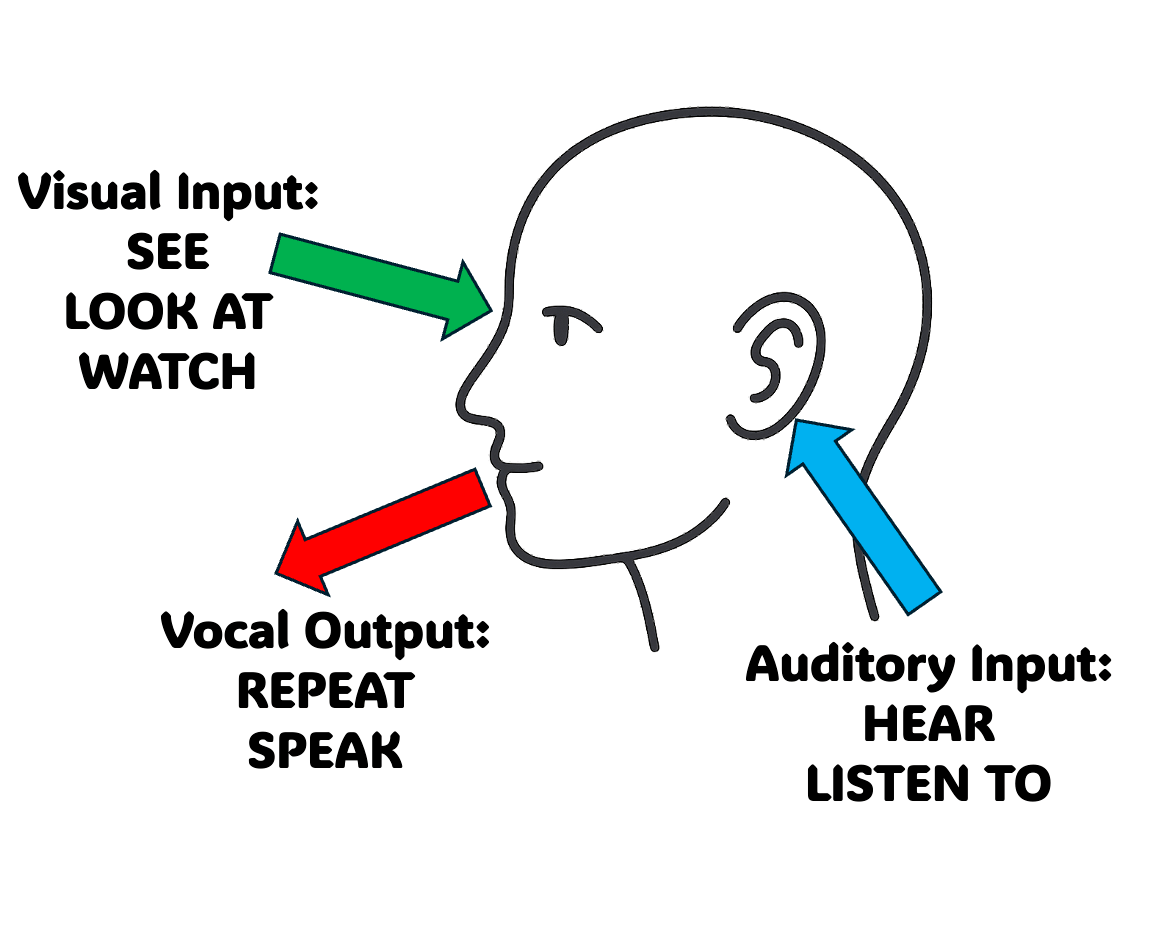
Children learn languages through play long before they ever learn rules — and adults can, too. Games activate multiple systems at once:
- Visual – recognizing images and matching words to meaning,
- Auditory – hearing pronunciation and rhythm,
- Motor – clicking, dragging, selecting, and reacting,
- Emotional – curiosity, fun, achievement.
When multiple areas of the brain fire together, the connections between meaning, spelling, and sound become stronger — and knowledge becomes automatic.
How These Games Support Different Learners
On gamestolearnenglish.com, you’ll find many types of simple, interactive games. Some introduce vocabulary, some focus on spelling and familiar letter patterns, others help you hear the difference between English spelling and English sounds, and some support quick recognition. Together, they create a multimodal learning environment that works exceptionally well for introducing vocabulary and building fast recall.
There is also one more element many learners forget: saying the words and short sentences aloud while playing. When we see, hear, and speak the language at the same time, input and speech production happen simultaneously — and this is what turns passive recognition into real, usable language.
Children
For children, especially those who struggle with reading or spelling, this is powerful. They see the word, hear it, repeat it, recognize its spelling, and connect it with an image — all without needing Polish. Because these tasks repeat naturally, English becomes something they can play with, not something to perform.
Teenagers
For teenagers, these games are especially supportive. They remove the pressure to “create” perfect sentences from scratch. Teenagers don’t have to invent content or worry about mistakes — they repeat, recognize, and interact. This offers a break from grammar-heavy schoolwork and creates a space where articulation can develop safely and without judgment.
Adults
For adults, the effect is often transformative. Many of us try to speak while tense, translating in our heads or aiming for perfection. Simple, light games lower expectations and help us relax into English without needing to produce full sentences immediately. We can focus on recall, pronunciation, and connecting English words directly to their meanings — without returning to the Polish → English loop.
Many learners try to express Polish thoughts using English words, and the brain — as a predictive system — fills in the gaps according to Polish patterns. These games begin to gently interrupt that process by providing ready-made English structures.
These activities also highlight the basic structure of English sentences — nouns, auxiliaries, verbs, and the usage of articles and prepositions. In natural connected speech, many of these elements are hard to hear, and so we often fail to use them. Seeing them clearly on the screen, repeating them aloud, and hearing them pronounced rebuilds an accurate internal model of English.
This makes game-based practice an excellent prelude to shadowing and listening, which we explore in the next chapter. Without substantial input, there is no natural speech production. Many of us try to express Polish thoughts using English words, and because the brain predicts missing elements, we fill in structures that don’t exist in English. These games provide stable, repeatable patterns we can later compare our own sentences to, long before we attempt spontaneous speech.
The Tool: Games to Learn English
I recommend using a free, simple platform:
It may look basic — and that’s the point. Basic structures are exactly what the brain automates first.
Ideal for:
- beginners who want to build vocabulary and simple sentence patterns,
- teenagers who like interactive learning,
- adults who want stress-free warm-ups before real conversations,
- parents who want to play together with their children.
Disclaimer:
Games to Learn English is a third-party website. Use it with discretion.
It offers simple, gamified tools — wonderful for pattern training, but not a full learning system.
How to Use These Games Effectively
- Play for 15–20 minutes, not for hours.
- Say the answers aloud — even quietly.
- Notice repeated patterns — that’s where the magic happens.
- Use them as a warm-up before speaking or listening.
- Don’t aim for perfection; aim for familiarity.
Think of this as neural training, not “studying.”
Next: Listen Your Way
In Chapter 7, you will explore the two ways your brain can learn from sound — helping you build better comprehension, pronunciation, rhythm, and confidence.